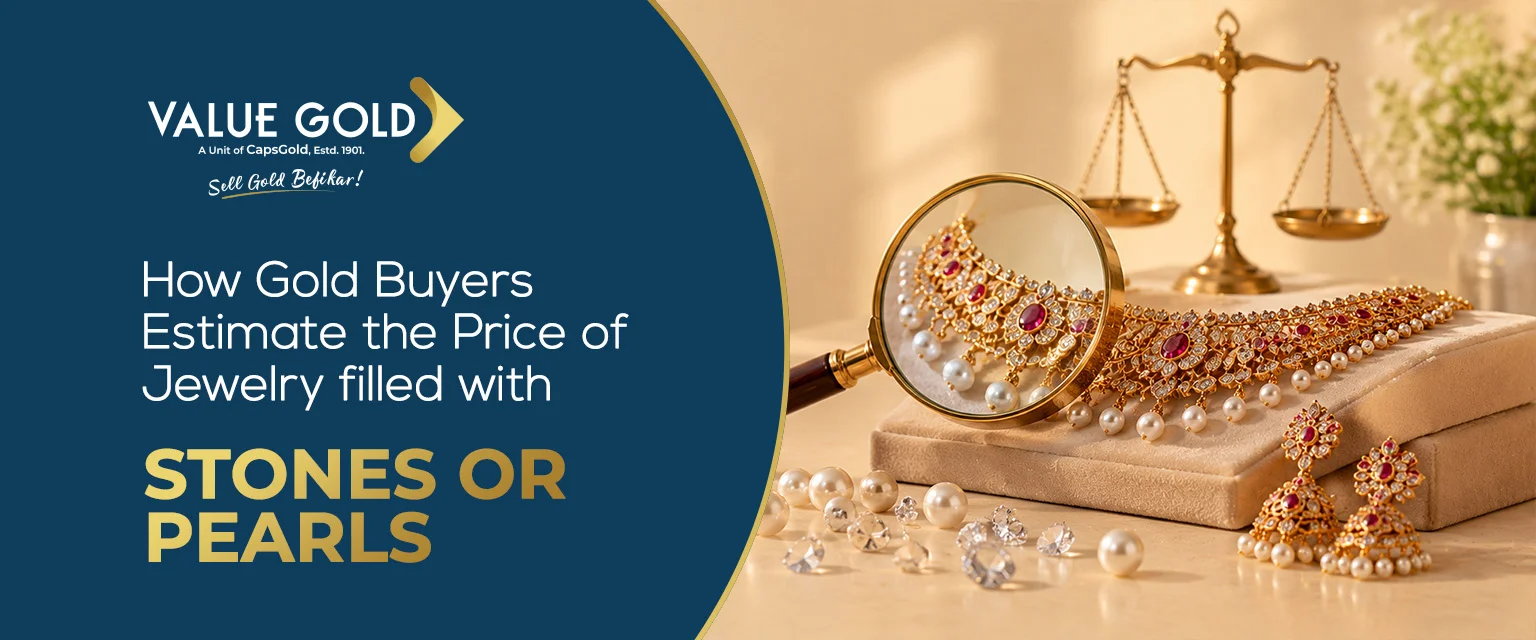
How Gold Buyers Estimate the Price of Jewellery Filled with Stones or Pearls
Date of Published: October 29, 2026
Table of Contents
- How Do Gold Buyers Value Jewellery with Stones?
- What Happens When Jewellery Contains Pearls?
- Factors That Determine the Final Offer
- Tips Before Selling Stone-Studded Jewellery
- Sell Old Gold Jewellery at Value Gold
- Frequently Asked Questions
- Conclusion
Gold jewellery often combines precious metal with decorative stones, pearls and intricate designs. From traditional necklaces to gemstone-studded bangles, these ornaments can hold significant financial and sentimental value. But when you decide to sell them, one question matters: how do gold buyers calculate the price when the jewellery contains materials other than gold? The answer lies in understanding how purity, net gold weight and the applicable gold rate influence the final offer. If you are considering selling gold jewellery with stones or pearls, knowing the valuation process can help you make a more informed decision.
How Do Gold Buyers Value Jewellery with Stones?
When evaluating jewellery containing stones, gold buyers generally focus on the value of the gold itself. The process usually involves examining the ornament, assessing its purity, determining its net gold weight and applying the relevant gold rate.
Assessing Gold Purity
The first step is to establish the purity of the gold. Jewellery may be made from 22 karat, 18 karat or another gold purity. Since the proportion of pure gold differs across these categories, purity directly affects the valuation. The buyer may use appropriate testing methods to assess the gold content before calculating its value.
Determining the Net Gold Weight
The total weight of a necklace or ring may include gold, stones, pearls, clasps and other materials. Therefore, the entire ornament’s weight may not represent its actual gold weight.
Depending on the jewellery and the buyer’s testing process, non-gold components may need to be accounted for separately. The buyer then uses the assessed gold weight and purity to calculate the gold value. This distinction is particularly important when selling gold jewellery with stones, as decorative elements can contribute considerably to the overall weight.
What Happens When Jewellery Contains Pearls?
Selling gold jewellery with pearls follows a similar principle. The buyer assesses the gold content separately from the pearls and other decorative materials. Natural and cultured pearls can have value in their own right, but their resale value depends on factors such as quality, condition, size and market demand. Not every gold buyer purchases pearls separately or includes their value in the offer.
If your jewellery contains pearls, ask whether the buyer evaluates them independently or considers only the gold content. This helps you understand exactly what the quoted price covers.
For example, a pearl necklace may weigh more than a plain gold necklace of the same size. However, the additional weight does not automatically translate into a higher gold valuation because the pearls are not gold.
Factors That Determine the Final Offer
Several factors influence how much you receive when selling jewellery containing stones or pearls.
Gold purity: Higher gold purity generally means a greater proportion of gold in the assessed weight.
Net gold weight: The amount of gold remaining after accounting for non-gold components influences the valuation.
Applicable gold rate: The rate used by the buyer on the day of the transaction affects the gold value.
Testing and valuation procedures: The buyer’s methods for assessing purity, weight and non-gold components can affect the calculation.
Stones and pearls: Their value may not be included in a gold-only offer. Ask whether they are purchased separately.
Other deductions: Check whether any deductions or service charges apply and request an explanation before accepting the offer.
Understanding these factors helps you compare offers based on what you will actually receive rather than the jewellery’s total weight alone.
Tips Before Selling Stone-Studded Jewellery
Before selling your ornaments, follow these practical steps:
- Understand the valuation. Ask how purity, net gold weight and the applicable gold rate are determined.
- Clarify the treatment of stones and pearls. Confirm whether they are valued separately or excluded from the gold offer.
- Compare reputable buyers. Look for transparent testing procedures and clear payment terms.
- Review the final offer. Ask about deductions and ensure you understand the calculation before agreeing to sell.
Whether you want to sell old gold for cash in Telangana or are exploring buyers elsewhere, these steps can help you approach the transaction with greater confidence.
Sell Old Gold Jewellery at Value Gold
If you want to sell old gold jewellery at Value Gold, enquire about the evaluation process for ornaments containing stones, pearls or other decorative components. Value Gold offers gold buying services across Telangana and Andhra Pradesh. If you are comparing the best old gold buyers in Andhra Pradesh or searching for the best old gold buyers in Telangana and Andhra Pradesh, consider transparency, testing procedures and clear communication when choosing a buyer. A reliable best gold-buying company should explain how your jewellery is assessed and what the final offer includes.
Visit Value Gold to explore its services and locate your nearest branch. You can also call 94778 94778 to enquire about the selling process and documentation requirements.
Frequently Asked Questions
Can I sell gold jewellery that contains stones?
Yes, many gold buyers accept stone-studded jewellery. The offer generally depends on the gold’s purity, net weight and applicable rate.
Do pearls increase the selling price of gold jewellery?
Not necessarily. Their value depends on whether the buyer purchases pearls separately. Ask for clarification before accepting the offer.
Why is the total jewellery weight different from the gold weight?
The total weight may include stones, pearls, clasps and other non-gold components. The gold valuation may therefore be based on a lower net weight.
Conclusion
Selling jewellery with stones or pearls becomes easier when you understand how its value is calculated. Gold purity, net gold weight and the applicable rate generally determine the gold component’s value, while decorative materials may require separate assessment.
Before selling, ask for a transparent breakdown of the valuation and compare reputable buyers. Visit Value Gold to enquire about selling your old gold jewellery and understand the evaluation process before making your decision.
Recently Posted
How Gold Buyers Estimate the Price of Jewellery Filled with Stones or Pearls
Do You Have to Pay Tax When You Sell Old Gold? A Simple Guide
Do All Old Gold Buyers Deduct Tarugu (Gold Deduction)? What Sellers Should Know
Why Two Gold Buyers May Offer Different Prices for the Same Jewellery
Related Blogs
How Gold Buyers Estimate the Price of Jewellery Filled with Stones or Pearls
Table of Contents How Do Gold Buyers Value Jewellery with Stones? What Happens When Jewellery Contains Pearls? Factors That Determine the Final Offer Tips Before Selling Stone-Studded Jewellery Sell Old…
Read More
Do You Have to Pay Tax When You Sell Old Gold? A Simple Guide
Table of Contents Do You Have to Pay Tax When Selling Old Gold? How Is Tax on Selling Gold Jewellery Calculated? What About Inherited or Gifted Gold? What to Know…
Read More
Do All Old Gold Buyers Deduct Tarugu (Gold Deduction)? What Sellers Should Know
Table of Contents Introduction What Is Tarugu in Gold? Why Do Gold Buyers Make Deductions? Is Tarugu the Same as Gold Purity Testing? Do All Old Gold Buyers Deduct Tarugu?…
Read More
Why Two Gold Buyers May Offer Different Prices for the Same Jewellery
Table of Contents Introduction Gold Jewellery Is Valued on Gold Content, Not Just Its Weight How Purity Testing Can Affect Your Offer Does the “Live Gold Rate” Differ From Shop…
Read More