
Why Two Gold Buyers May Offer Different Prices for the Same Jewellery
Date of Published: September 30, 2026
Table of Contents
- Introduction
- Gold Jewellery Is Valued on Gold Content, Not Just Its Weight
- How Purity Testing Can Affect Your Offer
- Does the “Live Gold Rate” Differ From Shop to Shop?
- Why Two Buyers Can Give Different Prices
- What Should You Compare Before Selling?
- Choose Transparency Along With Value
- The Bottom Line
You take the same gold chain to two different shops and receive two different offers. One buyer quotes ₹7,000 more than the other. Does that mean one of them is overcharging or the other is giving you a better deal?
Not necessarily. The price you receive for old jewellery depends on how its purity is assessed, the net gold weight considered, the gold rate applied and any deductions made during valuation. Understanding these factors can help you compare offers and find the best price for your old gold.
Gold Jewellery Is Valued on Gold Content, Not Just Its Weight
A common misconception is that if your jewellery weighs 20 grams, you will simply receive the day’s gold rate multiplied by 20. In reality, the calculation can be more involved. Consider a 20-gram necklace. If it contains stones, enamel or other non-gold components, the entire 20 grams cannot necessarily be treated as gold. The buyer first needs to determine the net gold weight.
The next factor is purity. Gold jewellery is available in different fineness levels. For example, 22K gold is commonly marked 916, indicating approximately 91.6% gold content, while 18K is 750 and contains approximately 75% gold. This is why the purity established during testing directly affects the valuation.
How Purity Testing Can Affect Your Offer
The purity of your jewellery is one of the most important factors in determining its value. A buyer should assess the actual gold content of the ornament rather than simply assuming its purity from appearance or relying only on what is stamped on it.
For example, if a piece is marked 22K/916, the buyer needs to establish whether the jewellery’s actual composition is consistent with that fineness. The purity assessment then becomes part of the valuation along with the net gold weight and applicable gold rate.
This is where the purity testing process matters. Different testing methods can have different levels of accuracy and may be more suitable for different types of jewellery. Factors such as plating, soldering, mixed-metal components or variations within a piece can also affect testing results. Therefore, when comparing two gold buyers, don’t simply ask, “What purity are you valuing my gold at?” Ask, “How was the purity tested, and what purity was established?”
A transparent gold purity test at Value Gold helps determine the gold content of the jewellery before its value is calculated. This gives you a clearer understanding of how the final offer has been arrived at.
Does the “Live Gold Rate” Differ From Shop to Shop?
Yes, the rate quoted to customers can differ between buyers. Gold has a continuously changing market price, but a gold buyer’s purchase rate may depend on factors such as the purity being valued, the market reference they use and their own pricing methodology. For example, one buyer may quote a particular rate for 22K gold while another displays a different 22K buying rate.
However, comparing only the rate per gram can be misleading.
Imagine:
Buyer A: ₹10,000 × 20g = ₹2,00,000
Buyer B: ₹10,300 × 20g = ₹2,06,000
Buyer B appears to offer ₹6,000 more. But if Buyer B subsequently applies deductions and Buyer A doesn’t, the final payout could be much closer or even reverse the difference. Therefore, the number that really matters is the final amount you receive, after the buyer has completed the valuation.
Why Two Buyers Can Give Different Prices
When comparing gold buying services, look at the complete calculation rather than one figure.
The difference can come from:
- Purity assessment
A different purity assessment changes the gold content being valued. - Net gold weight
Stones and other non-gold components may be excluded from the gold weight. - Applicable gold rate
Buyers may use different rates when purchasing old gold. - Deductions
Processing or other applicable deductions can affect the final payout. - Valuation methodology
The way each buyer calculates the final value can differ.
So, two shops can legitimately arrive at different offers for the same jewellery without the jewellery itself changing.
What Should You Compare Before Selling?
If you’re comparing the best old gold buyers in Telangana & Andhra Pradesh, don’t ask only:
“What is your rate per gram?”
Ask for the complete valuation:
- What purity was detected?
- What is the gross weight?
- What is the net gold weight?
- Which gold rate is being applied?
- Are there any deductions?
- What is the final amount payable?
This makes it much easier to compare one buyer with another.
Choose Transparency Along With Value
When selling old jewellery, getting the highest possible value is important but so is knowing how that value was calculated. A transparent gold buyer should make the process understandable, from purity testing to the final payout. For customers looking for instant cash for gold, Value Gold provides gold buying services where the jewellery can be assessed before the final value is determined.
If you plan to sell gold at Value Gold, understanding purity, net weight, and the applicable gold rate can help you approach the transaction with greater confidence.
The Bottom Line
The same jewellery can receive different offers because the valuation differs from buyer to buyer. So, when comparing gold buyers, don’t focus on the highest rate alone. Check the purity, net gold weight, rate, deductions and final payout. That’s the better way to determine who is actually offering you the best price for your old gold.
Recently Posted
Do All Old Gold Buyers Deduct Tarugu (Gold Deduction)? What Sellers Should Know

Value Gold Branches Across Telangana and Andhra Pradesh: Your Local Gold Selling Partner
Verified Gold Buyers in Kurnool: Everything You Need to Know Before Selling
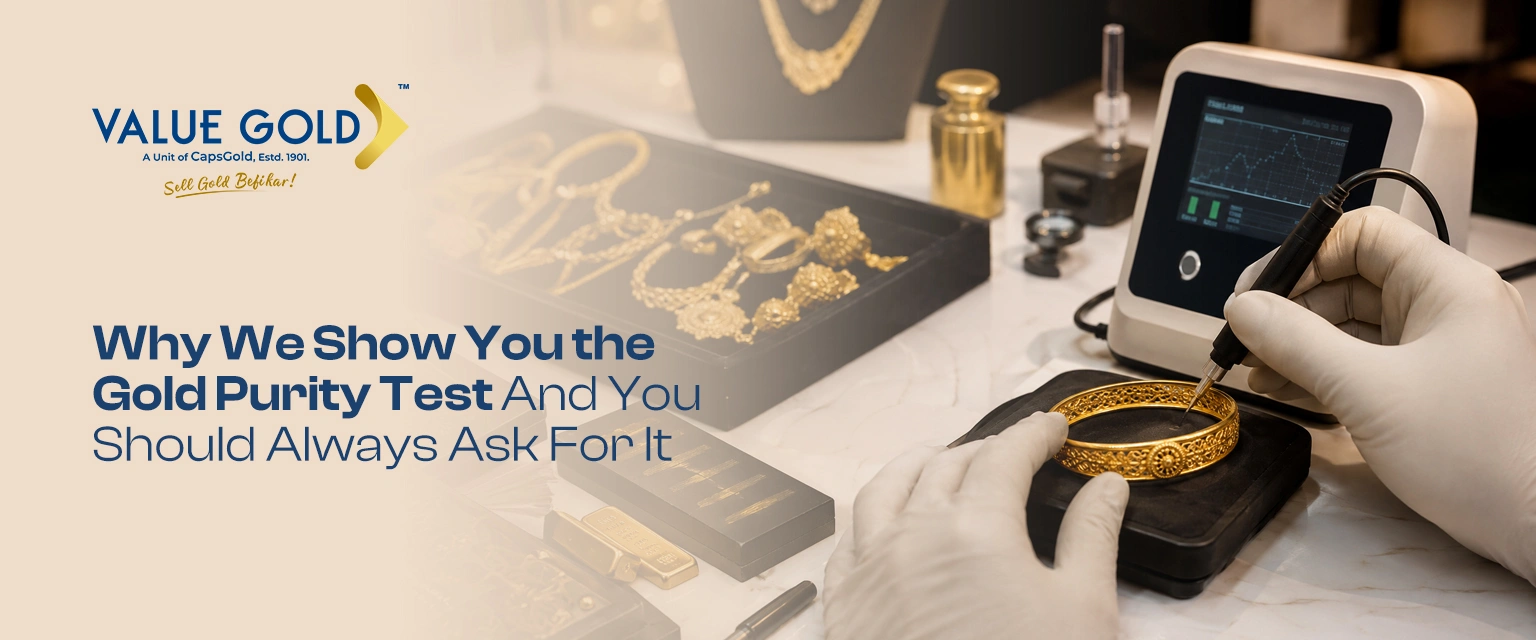
Why We Show You the Gold Purity Test and Why You Should Always Ask for It
Related Blogs
Do All Old Gold Buyers Deduct Tarugu (Gold Deduction)? What Sellers Should Know
Table of Contents Introduction What Is Tarugu in Gold? Why Do Gold Buyers Make Deductions? Is Tarugu the Same as Gold Purity Testing? Do All Old Gold Buyers Deduct Tarugu?…
Read More
Value Gold Branches Across Telangana and Andhra Pradesh: Your Local Gold Selling Partner
Table of Contents Introduction Value Gold Branches in Telangana Value Gold Branches in Andhra Pradesh Your Gold Buyer, Right in Your Neighbourhood Selling old gold becomes much easier when a…
Read More
Verified Gold Buyers in Kurnool: Everything You Need to Know Before Selling
Table of Contents Introduction What Should You Check Before Selling Gold? Why Does the Gold Purity Test Matter? What If Your Gold Is Pledged? What Does the Gold Buying Process…
Read More
Why We Show You the Gold Purity Test and Why You Should Always Ask for It
Table of Contents Introduction Why Does Gold Purity Matter When You Sell? What Happens During a Gold Purity Test? Why Should You See the Test? How Purity, Weight and Gold…
Read More