Do All Old Gold Buyers Deduct Tarugu (Gold Deduction)? What Sellers Should Know
Date of Published: September 30, 2026
Table of Contents
- Introduction
- What Is Tarugu in Gold?
- Why Do Gold Buyers Make Deductions?
- Is Tarugu the Same as Gold Purity Testing?
- Do All Old Gold Buyers Deduct Tarugu?
- What Should You Check Before Selling Old Gold?
- Choosing the Right Gold Buyer
- The Bottom Line
When you decide to sell old gold, the amount you receive depends on more than the current gold price. One term you may hear during the valuation process is ‘tarugu’, or ‘gold deduction’. But what exactly does it mean? Do all buyers apply it, and how can you know whether the deduction is reasonable? Understanding how gold is tested, valued, and priced can help you make a more informed decision and choose among the best old gold buyers.
What Is Tarugu in Gold?
So, what is tarugu in gold? In simple terms, tarugu refers to a deduction made from the assessed value of gold during the buying process. Depending on the buyer and the type of jewellery, this may relate to factors such as purity, non-gold components, stones, soldering, or other materials present in the jewellery.
For example, an old gold ornament may contain gemstones, enamel, hooks, clasps, or other non-gold elements. These may not contribute to the final gold value. Therefore, the buyer needs to determine the actual gold content before making an offer. The important point is that tarugu is not necessarily a fixed deduction that every gold buyer must charge. The method and amount can vary between buyers.
Why Do Gold Buyers Make Deductions?
Gold jewellery is rarely made entirely of pure gold. Even 22K jewellery contains other metals to achieve the required strength and durability. Additionally, ornaments may contain stones or other materials that have no gold value.
This is why a professional valuation generally considers:
- The jewellery’s purity
- Net gold weight
- Current gold market price
- Non-gold materials or stones
- Applicable deductions, if any
A transparent buyer should be able to explain how the final payable amount was calculated rather than simply quoting a reduced price.
Is Tarugu the Same as Gold Purity Testing?
No. Gold purity testing and tarugu are two different parts of the valuation process. A purity test determines the quality or karat of the gold. For instance, an ornament may be tested to establish whether it is 18K, 20K, 22K, or another purity level.
At Value Gold, the gold purity test at Value Gold is an important part of the valuation process. Scientific testing helps establish the purity of the jewellery before its value is calculated. Once purity and net gold weight are established, the applicable gold rate and other valuation factors can be considered.
Do All Old Gold Buyers Deduct Tarugu?
No. There is no universal rule that every buyer must apply the same gold deduction charges.
Different buyers may follow different valuation methods. Some may have deductions for specific jewellery components, while others may structure their offer differently. What matters to the seller is the final value offered and whether the calculation is clearly explained.
Instead of focusing only on whether a buyer says “no tarugu”, compare the complete valuation. A buyer offering a seemingly higher rate but applying other deductions may not necessarily give you a better final payout.
What Should You Check Before Selling Old Gold?
Before you sell old gold, ask the buyer a few straightforward questions:
1. How is the purity being tested?
Understand whether the buyer is using a professional testing method and whether the result is explained to you.
2. What is the net gold weight?
The total jewellery weight may include stones or other non-gold components. Ask how the net gold weight has been determined.
3. Which gold rate is being used?
Gold prices change with the market. Ask which rate is being considered for your valuation.
4. Are there any deductions?
If a deduction is being applied, ask what it represents and how it affects the final amount.
5. What will I actually receive?
The most useful number is the final payout after all applicable calculations—not just the quoted gold rate.
Choosing the Right Gold Buyer
When searching for the best old gold buyers, transparency should be one of your first considerations. A professional buyer should give you clarity about purity, weight, rate, deductions, and the final amount before completing the transaction.
Value Gold focuses on a transparent valuation process, where gold is assessed based on its purity and weight and the applicable market rate. This gives sellers a clearer understanding of how their old jewellery is valued.
The Bottom Line
Tarugu is not simply a standard charge that every old gold buyer has to deduct. The important thing is to understand why any deduction is being made and how it affects your final payout.
Whether you are selling an old chain, ring, bangle, necklace, or other jewellery, don’t compare buyers only on the advertised gold rate. Compare their purity testing, weighing process, deductions, transparency, and final offer. With the right information, you can approach the process with confidence and make a better-informed decision when you sell old gold.
Recently Posted

Why Two Gold Buyers May Offer Different Prices for the Same Jewellery

Value Gold Branches Across Telangana and Andhra Pradesh: Your Local Gold Selling Partner
Verified Gold Buyers in Kurnool: Everything You Need to Know Before Selling
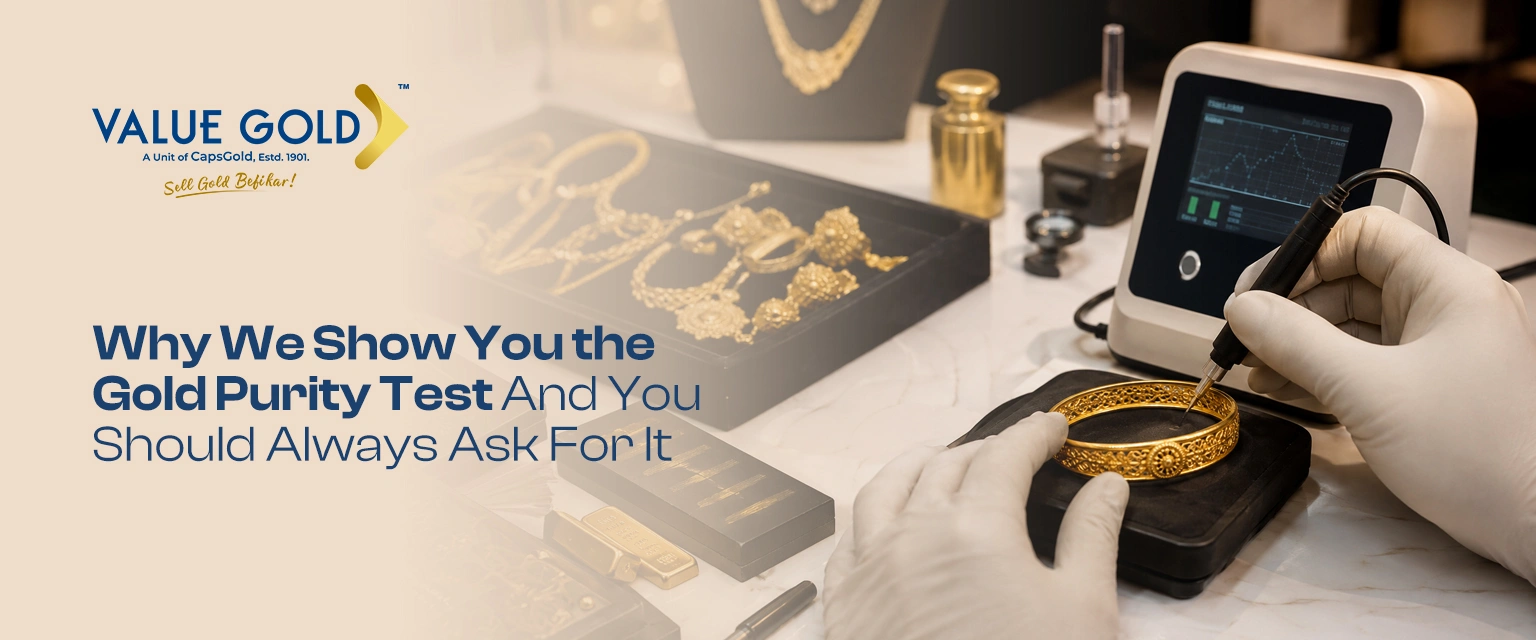
Why We Show You the Gold Purity Test and Why You Should Always Ask for It
Related Blogs
Why Two Gold Buyers May Offer Different Prices for the Same Jewellery
Table of Contents Introduction Gold Jewellery Is Valued on Gold Content, Not Just Its Weight How Purity Testing Can Affect Your Offer Does the “Live Gold Rate” Differ From Shop…
Read More
Value Gold Branches Across Telangana and Andhra Pradesh: Your Local Gold Selling Partner
Table of Contents Introduction Value Gold Branches in Telangana Value Gold Branches in Andhra Pradesh Your Gold Buyer, Right in Your Neighbourhood Selling old gold becomes much easier when a…
Read More
Verified Gold Buyers in Kurnool: Everything You Need to Know Before Selling
Table of Contents Introduction What Should You Check Before Selling Gold? Why Does the Gold Purity Test Matter? What If Your Gold Is Pledged? What Does the Gold Buying Process…
Read More
Why We Show You the Gold Purity Test and Why You Should Always Ask for It
Table of Contents Introduction Why Does Gold Purity Matter When You Sell? What Happens During a Gold Purity Test? Why Should You See the Test? How Purity, Weight and Gold…
Read More